Somewhere between Facebook asking what was on our minds and everybody becoming a Digital Creator, we started believing people were actually waiting patiently to find out all about us. Social media didn’t create our tendency to make everything about ourselves. It simply built the perfect machine for rewarding it.
It’s hard not to get sucked into it. It’s important to understand that as you read further, recognize yourself in paragraph four, and immediately assume I wrote the whole damn thing about you. Actually, if you do that, you’ve saved me the trouble of explaining main character syndrome.
You’ve probably seen it happen. Somebody posts something deliberately vague like, “It’s amazing how quickly you find out who your real friends are.” That’s it. No name. No explanation. Nothing identifying the person they’re talking about.
Within minutes, someone responds. “If you have something to say about me, say it to my face.”
And somewhere, the person who wrote the original post is staring at their phone, thinking, “Who the hell said I was talking about you?”
That’s one of my favorite things about social media. We don’t even need someone else to put us in the story anymore. We’ll write ourselves into it.
Someone posts that they’re tired of dealing with negative people. Three friends immediately wonder if they’re the negative person. Someone says they’ve finally removed a toxic person from their life, and six people quietly check the friends list to see if they’re still there.
Nobody said our name. Nobody described us. Nobody even gave us a clue. But apparently we’ve been practicing our entire lives for the opportunity to star in The Mysterious Facebook Post That Was Obviously About Me.
Then Facebook made things worse by turning everybody into a brand. I’ve had actual friends become Digital Creators. These are people I knew before there was anything particularly digital or creative about them. Then one day Facebook put “Digital Creator” under their name and something happened. I commented on a friend’s post the same way I’d commented on their posts for years.
Suddenly I got something like, “Thanks for the support! ❤️” It’s as if they turned off engagement while trying to engage. They appreciate all their fans.
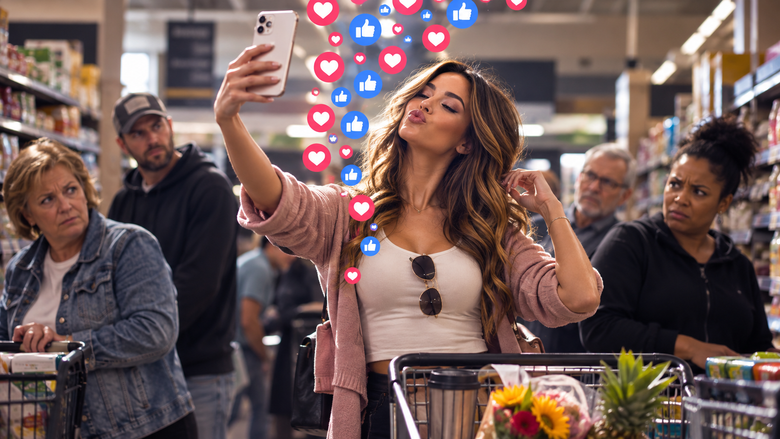
The support? What? We’re friends, you self-centered selfie master. I didn’t discover you on TikTok. I’m not rushing you for your autograph. I was scrolling while taking my morning constitutional and left an attempt at being funny on your post. But now I’m apparently part of your fan base. We knew each other in high school before you completed your studies in photography at iPhone. What did you major in, portrait mode or advanced selfie?
Maybe that’s what makes main character syndrome so interesting. Social media didn’t invent our tendency to put ourselves in the middle of everything. It just gave us better equipment.
We have followers now. We have analytics. We have engagement. We have view counts. We have notifications telling us that somebody reacted to something we said. We even have dashboards showing us exactly how many human beings looked at us today.

After staring at those numbers long enough, maybe it’s inevitable that somebody eventually walks into the grocery store thinking they’re on set. And that’s where things really get interesting. Because main character syndrome doesn’t stay online. It follows us right through the front door and into everybody else’s day.
The grocery store might be the best place to see it happen. There’s always someone who parks their shopping cart sideways across the aisle and then wanders six feet away to investigate spaghetti sauce as if they’re always on camera. They’re not being intentionally rude. For those few minutes, they’re on a set that looks suspiciously like a grocery store.
I used to get annoyed by these people. Now I’m fascinated by them. I’ll stand there waiting while someone compares two jars of Ragu like the fate of the Western world depends on the sodium content. Meanwhile, three carts are backed up behind them and another person is attempting to squeeze past the display of canned tomatoes.
They don’t notice. They’re on set in the middle of their scene. We’re all just extras.
Then there’s the person watching videos on their phone with the volume turned all the way up in a waiting room. No headphones. No earbuds. Just forty strangers suddenly listening to whatever this person decided we were all watching today.
Maybe that’s the purest form of main character syndrome. It doesn’t occur to them that they’re watching a video in public. From their perspective, we’re all sitting in their living room.
The same thing happens with FaceTime. Somewhere along the way, people decided that holding a private conversation at full volume in a public place was perfectly normal. Now I know what someone’s sister said about Kevin, why Kevin shouldn’t be trusted, and what they’re having for dinner tonight. I don’t know Kevin. But I’m starting to agree with his sister.
Then there’s the fast-food line. Someone stands in front of you for ten minutes. The menu has been glowing above their head the entire time. Burgers. Chicken. Fries. Drinks. Nothing particularly surprising has happened at McDowell’s since they got in line.
Then they reach the counter. “Hmm. Let’s see.”
Now you’re looking? There were nine people ahead of you. You had time to study the menu, change your mind twice, check the nutritional information, and write a short biography of Ronald McDowell. But apparently you must have experienced the menu making last-second changes you don’t want to miss.
And then, there’s the left lane. There’s always somebody doing a mile an hour over the speed limit while seventeen cars are following like a funeral procession. They’re not teasing other drivers. They’re not road raging. They aren’t teaching anyone a lesson. They’re just driving their car in their lane on their highway. We’re just fortunate enough to have been invited along for the ride.
Maybe that’s what makes all of this so funny. Most of these people wouldn’t consider themselves to be selfish. They’re probably perfectly decent people. They just lose themselves for a minute, and it’s not all social media’s fault. But that is a part of what’s conditioning the mind.
Have you met the conversational main characters? It starts with friends who can take absolutely anything happening in your life and somehow find a route back to themselves. You tell them your dog died and before you’ve finished explaining what happened, they’re telling you about the dog they lost in 2007. Now they have you comforting them.
Tell them you worked twelve hours yesterday and they’ll tell you about the time they worked sixteen. Your back hurts. Their back is worse. You haven’t slept since Tuesday. They haven’t slept since the Clinton administration. At some point you forget what you originally complained about because you’ve accidentally entered the Suffering Olympics and you’re getting your ass kicked.
Success isn’t safe either. Tell your friend suffering from main character syndrome that your daughter was promoted to manager and five minutes later you’re looking at pictures of their son’s new house. Mention that you struck a good deal and they’ll tell you how about the five deals they have in the works.
Celebrity deaths produce another fascinating version of it. A famous musician dies, and suddenly everyone’s hustling to find a photo that was taken in 1993.
“I can’t believe you’re gone. I’ll never forget you.”
“You posed with them at a comic con. You weren’t best friends. You didn’t vacation together. Did they even know your name?”
The strange part is that I don’t think most people doing these things are intentionally trying to steal attention. We experience life from inside our own heads, so our own experiences are the first reference points we have. You tell me something painful and my brain searches for the closest painful thing I’ve experienced. You tell me something wonderful, and I remember something wonderful from my own life. Sometimes we’re not trying to make the conversation about ourselves. We’re trying to show someone we understand.
The problem with main character syndrome comes when we forget to give the conversation back. Maybe your friend’s vague Facebook post isn’t secretly about you. Maybe that person who didn’t call isn’t angry. Maybe the world didn’t rearrange itself overnight specifically to piss you off. There’s a remarkably simple possibility to consider.
It’s Probably Not About Me – the song
The ridiculous little spiral that begins when somebody posts something vague online, and your brain immediately volunteers you as the subject. With absolutely no evidence, a cryptic sentence becomes an investigation involving old conversations, questionable memories, and increasingly creative theories about what you might have done. The song pokes fun at overthinking and our tendency to make ourselves the main character in somebody else’s vague post. It’s probably not about you. But, you know, it’s a good possibility.