
Why We Need More Education and Less Confusion About Sex, Gender, and Identity
Whatever happened to teaching people something before expecting them to understand it? We live in a society where people can argue for hours about sex, gender, and identity without agreeing on what the words mean. And somehow, asking for a definition can turn an ordinary conversation into a political battlefield.
I remember sitting in an elementary school classroom sometime in the 1970s when my teacher introduced us to the difference between sex and gender. I can’t remember whether I was in third grade or fifth grade, but I remember the lesson and the confusion that followed. Hands started going up around the classroom as kids asked questions, wanted examples, and tried to understand what the teacher was explaining.
I understood the basic concept fairly quickly. Sex and gender were related, but they weren’t the same thing. Biological sex concerned physical characteristics, while gender involved the expectations society placed on people because of those characteristics.
More than forty years later, we’re still having that conversation. Except now, instead of a classroom full of curious children raising their hands, we have a society full of adults arguing with one another. And I keep coming back to one question.
Whatever happened to social awareness?

We Used to Teach People Things
Remember when public education campaigns were everywhere? We taught people why recycling mattered and explained why aluminum belonged in one container while ordinary garbage belonged in another. We educated communities about industrial pollution, contaminated waterways, and the dangers of dumping chemicals into lakes and streams.
We didn’t simply tell people to recycle and then get angry when they put something in the wrong container. We explained what belonged where, defined the categories, and helped people understand why those distinctions mattered. Once people understood the reasoning, they could make informed decisions.
So why can’t we approach conversations about sex, gender, and identity with that same educational mindset? I’m not suggesting that nobody is trying, because LGBTQ+ organizations, educators, and advocates have spent decades explaining these subjects. But clearly, the message hasn’t reached everyone, and telling confused people that they should already know the answers doesn’t solve anything.
Education should come before expectation.
Sex and Gender Are Not the Same Thing
Let’s establish something important before going any further. Biological sex and gender are different concepts, even though they’re closely related. Biological sex involves physical characteristics such as chromosomes, reproductive anatomy, hormones, and sexual development, with most people developing along typical male or female biological patterns.
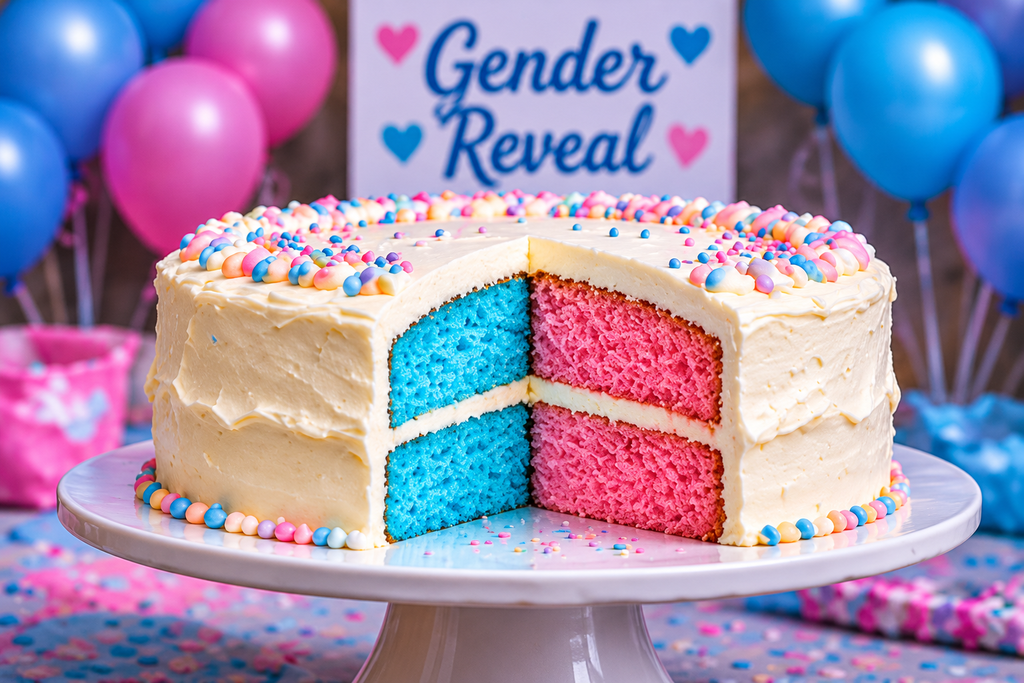
Gender is more complicated because it involves identity, expression, and social expectations associated with masculinity and femininity. Consider something as ordinary as a gender-reveal party where someone cuts into a cake and discovers blue or pink frosting. Blue traditionally announces a boy, while pink announces a girl, but there’s nothing biologically masculine about blue frosting or feminine about pink frosting.
Those colors represent cultural associations rather than biological characteristics. In fact, the colors associated with boys and girls have changed throughout history, demonstrating how social expectations develop and evolve. We create customs, reinforce them, and eventually begin treating them as though they’ve always existed.
There’s another distinction worth understanding. Gender expression describes how someone presents themselves through appearance, clothing, or behavior, while gender identity describes a person’s internal sense of being male, female, neither, or somewhere in between. Those two concepts aren’t necessarily the same, and recognizing that difference helps explain much of the terminology we’re discussing today.
My Six Categories
Over the years, I’ve developed a simple framework that helps me understand gender. I recognize six broad categories that allow me to organize the concepts without memorizing dozens of different labels. They aren’t scientific classifications, and I’m not suggesting that everyone must fit neatly into one of them.
The first four categories are feminine females, masculine females, feminine males, and masculine males. The fifth describes people whose gender experience or expression moves between categories, while the sixth describes people who don’t identify with gender categories at all. That’s the framework I’ve used to make sense of a subject that has become increasingly complicated in public conversation.
Before someone starts preparing an angry response, let me clarify something. I’m not claiming that science has established exactly six genders, and I recognize that my categories combine biological sex, gender expression, and gender identity. They’re simply a starting point that helps me understand the distinctions.
For example, someone who doesn’t identify with any gender might describe themselves as agender, while someone whose gender identity changes over time might describe themselves as genderfluid. A masculine woman and a feminine woman might both identify simply as women, and someone can reject traditional gender expectations without rejecting their gender identity. These examples demonstrate why understanding the underlying concepts matters more than trying to force everyone into a particular category.
Notice what happened when we explained those differences. We established definitions, clarified terminology, and learned something without demanding that everyone share the same personal experience. Nobody had to get angry, and nobody had to surrender their identity for the conversation to move forward.
Remember Eddie Izzard?
One of my favorite comedians provides an interesting example of how terminology and identity can change over time. Eddie Izzard, now known as Suzy Izzard, performed comedy wearing high heels, makeup, and traditionally feminine clothing. I remember Izzard discussing those clothing choices while publicly identifying as a man, and I understood the distinction.
Here was someone who enjoyed dressing in a way society traditionally associated with women. That didn’t bother me, and it certainly didn’t prevent me from enjoying the performances. The jokes were hilarious, and that’s what mattered when I was watching a comedian.
Years later, Izzard publicly identified as transgender and expressed a preference for the name Suzy and she/her pronouns. Suddenly, I had new information about someone I had understood differently decades earlier. That didn’t mean I misunderstood what she said years ago, but it did mean her public description of herself had evolved.
And that’s where education becomes valuable. Cross-dressing describes clothing or presentation, while being transgender concerns gender identity, and those are two different concepts. A man can wear a dress without identifying as a woman, just as a transgender woman doesn’t have to wear dresses to identify as a woman.
People can discover new ways to understand and describe themselves as they grow older. I can understand that, even when the terminology is unfamiliar or different from what I learned years earlier. But understanding those changes becomes much easier when someone explains the definitions rather than assuming everybody already knows them.
The Words Have Changed
When I was younger, I regularly heard terms such as transvestite, transsexual, and transgender. For years, I thought some of those words specifically described people undergoing surgery to change their physical characteristics. As it turns out, my understanding of those definitions wasn’t entirely correct.
Historically, the word transvestite generally referred to someone who wore clothing associated with another sex. Today, cross-dresser is usually the preferred term, although some people still use the older terminology to describe themselves. Neither term automatically means that someone wants surgery or identifies as another gender.
The term transsexual was often associated with people who sought to change their physical sex characteristics through medical treatment. Surgery was never a universal requirement, and some people continue to use the term to describe themselves today. Its meaning and usage have also varied over time, which helps explain why older definitions don’t always match contemporary conversations.
Transgender is a broader term describing someone whose gender identity differs from the sex they were assigned at birth. A transgender person may pursue hormones or surgery, but medical treatment isn’t a requirement for being transgender. The distinction concerns identity rather than whether someone has undergone a particular procedure.
These distinctions matter because words carry meanings, and those meanings influence how people understand one another. When terminology changes, people who learned an earlier vocabulary may need an explanation of what changed and why. That shouldn’t be treated as an unreasonable request when the goal is better communication.
Even the Acronym Deserves an Explanation
Consider LGBTQ+, an acronym most people have encountered but not everyone fully understands. The first three letters refer to lesbian, gay, and bisexual, which concern sexual orientation. The T refers to transgender identity, while the Q commonly refers to queer or questioning, and the plus sign acknowledges additional identities and orientations.
Even within the acronym, we’re discussing different aspects of human experience. Sexual orientation concerns attraction, gender identity concerns someone’s understanding of their gender, and gender expression concerns how someone presents themselves. These concepts can overlap, but they aren’t interchangeable.
The communities represented by those letters have shared histories of advocacy, discrimination, and civil rights efforts. That helps explain why different identities and orientations are discussed together under one acronym. But understanding their shared history shouldn’t prevent us from explaining the differences between the terms themselves.
Understanding Doesn’t Require Agreement
Here’s where I think conversations often go wrong. People sometimes confuse understanding a concept with being required to agree with every interpretation of it. Those are different things, and treating them as interchangeable makes productive conversation much more difficult.
I can understand what someone means by genderfluid without personally experiencing gender that way. I can understand why someone identifies as agender without identifying that way myself, and I can learn someone’s name and pronouns without memorizing every identity label anyone has ever proposed. Understanding another person’s experience doesn’t require having that experience yourself.
Respect doesn’t require encyclopedic knowledge, but it does require a willingness to recognize that other people have experiences different from our own. At the same time, people asking sincere questions shouldn’t automatically be treated as though they’re acting in bad faith. There’s a meaningful difference between someone deliberately mocking another person and someone genuinely trying to understand unfamiliar terminology.
That distinction deserves more attention than it receives. If someone asks a sincere question, answering it can create an opportunity for understanding rather than confrontation. We shouldn’t make people afraid to learn simply because they haven’t already mastered the vocabulary.
Define the Lines, Then Blur Them
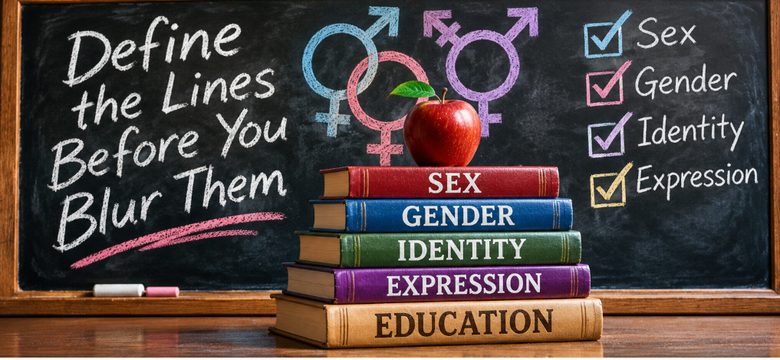
Here’s my central argument, and it’s simpler than people might expect. Before we expect people to understand how gender categories overlap, change, or extend beyond traditional definitions, we should explain what those categories mean. Without a common foundation, even people who genuinely want to understand one another can end up talking past each other.
Define biological sex, gender identity, gender expression, and sexual orientation. Explain how those concepts differ, then introduce the terminology people use to describe their experiences. When the language evolves, explain why it has changed and how the newer definitions relate to the older ones.
This doesn’t mean individuals must fit into rigid categories or obtain permission to describe their own identities. It doesn’t mean that terminology must remain frozen in time or that people should stop exploring new ways to express themselves. It means that understanding becomes easier when everyone has access to clear explanations of the language being used.
Language is supposed to help people communicate, not become another obstacle between them. When terminology becomes confusing, the solution should be better communication and more opportunities to learn. Turning every misunderstanding into an argument only makes the distance between people greater.
We Could All Use a Little More Education
I’m old enough to remember when teachers encouraged students to raise their hands and ask questions. That’s how we learned, even when we didn’t understand something the first time or needed another example. Sometimes we discovered that what we thought we knew wasn’t entirely correct, and that discovery was part of the educational process.
Today, discussions about gender can become so politically and emotionally charged that people are afraid to ask basic questions. Others become frustrated because they feel nobody is listening to their explanations or taking their experiences seriously. Neither situation encourages understanding, and both can leave people more divided than they were before the conversation began.
I don’t believe everyone needs to memorize dozens of gender identities to participate respectfully in society. I do believe everyone benefits from understanding the differences between biological sex, gender identity, gender expression, and sexual orientation. And I believe we can teach those distinctions without turning every conversation into an argument.
I’m not asking anyone to stop being themselves or fit into my six categories. I’m asking for something much simpler, something that shouldn’t be controversial in a society that values education and understanding. Help people understand the language before criticizing them for not speaking it fluently.
We managed to teach entire generations why aluminum cans shouldn’t be thrown into rivers. Surely we can teach people the difference between sex and gender without turning the classroom into a battlefield. And if someone still doesn’t understand, maybe we should remember how education worked before every question became an argument.
Let them raise their hand. Let them ask the question. And for once, let’s give them an answer instead of a reason to be afraid to ask.